Japanese Pop
 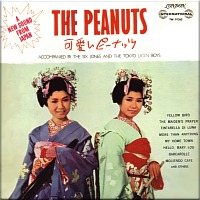 |
These export/tourist albums should not be mistaken for pop records made for Japanese consumers. The first popular lps of Japanese music (in America) were marketed as mementos for U.S. servicemen who had been stationed in Japan at the end of World War Two. Interest in Japanese music also gained when Hawai'i became a state. There are Japanese entries in the two chief, exotic lp series, Columbia's Adventures in Sound and [Capitol's] Capitol of the World. Dozens of labels issued Japanese koto and samisen albums, from classical to jazz hybrids. And airlines issued travelogues: "Come to Japan -- your stewardess is a geisha!" Hawai'ian and exotica artists, such as Gene Rains, Arthur Lyman, and Martin Denny, hired Japanese musicians (some playing samisen and other traditional instruments), covered Japanese standards, and composed their own impressions. Progressive records from Japan offered amazing glimpses into the rapid transformation of Japan into a modern, more global society. And Latin music had an enormous impact on Japanese music, as in the U.S. The classic, smash hit exported from Japan, not counting Godzilla soundtracks, is comedian-actor-singer Kyu Sakamoto's "Sukiyaki" (or, "I Look Up When I Walk"). Even today the great influence of this song is acknowledged by Japanese pop recyclers, The Pizzicato Five. But it was the ultra-cute Peanuts who brought everything together: Latin and American hybrid pop, exotica ("Yellow Bird"), and even Godzilla soundtracks. From the ashes of all this embarassing cheesiness, the noisier, hipper Japanese [punk, metal, grunge, bossa nova...] bands of today lumber forth, like resurrected, fire-breathing monsters thrashing up the next wave. "Eeeeeaaah!" screams Godzilla. (Sorry, couldn't resist.) Buying: Snap up any Peanuts. The several LPs on Hawaii's 49th State label are authentic and mostly very worthwhile. Some of the Capitol and Lyrichord LPs are fantastic, and the ritual/temple music and chants of Japan are "out there." |
Japanese [Pop] LPs
| Rating | |
| -> | 49th State |
| 7 | Shofu Abe w/Heizan Shibata: Spirit of Shanghai-Japanese Chant; Lyrichord LLST-7346 (formerly 7164) |
| 7 | Yukiji Asaoka: Songs by Japan's Yukiji Asaoka; Capitol [of the World] T-10242 |
| 6 | Harold Courlander (editor): Folk Music of Japan; Folkways FE-4429; 1951/1950 |
| 7 | The Dark Ducks S(w)ing Japanese Folk Songs; Monitor MFS-458 (w/Leon Symphoniette cond. K. Hattori) |
| Kimio Eto: Japanese Koto Music; World Pacific ST-1423 | |
| Kimio Eto & Bud Shank: Koto and Flute; World Pacific ST-1424 | |
| Kimio Eto: Koto Master; World Pacific ST-1428 | |
| 5 | Hanako Fukado: Favorite Songs of Japanese Children; Bowmar B-123; 1964 (Japanese/kids/instruction; Fukado is the editor; others sing, perform, narrate) |
| 6 | Douglas G. Haring (rec.): Japanese Buddhist Ritual; Folkways FE-4449; 1954 |
| Ikuta-Ryu, Master Musicians of: Japanese Koto Music with Shamisan & Shakuhachi; Lyrichord LL-7131 | |
| 6 | Bob Kojima & his Orchestra: Moshi-Moshi; ABC-Paramount ABCS-328; 1960 |
| 7 | Yotsuo Koyama & his Tokyo Mandolins: [Romantic] Japanese Mandolins; Capitol [of the World] ST-10376 (Yotsuo Koyama's Cherry Blossom Ensemble; w/electronic organ) |
| 8 | Frank Kumagai, E. Straus: Authentic Folk Songs of Japan; Standard LP-421 (accomplished tenor and actor) |
| Kyoto Imperial Court Orchestra: Gagaku--The Imperial Court Music of Japan; Lyrichord LL-7126 | |
| Kyoto Kabuki Orchestra: Japanese Kabuki Nagauta Music; Lyrichord LL-7134 | |
| Kyoto Nohgaku Kai: Japanese Noh Music; Lyrichord LL-7137 | |
| 7 | Paul Mark: East to West; Imperial LP-9120 |
| 8 | Mamoru Miyagi & the Graduates of Tokyo's University of Arts: Japan Revisited; Capitol [of the World] T-10195 |
| 7 | Miko Live at Riviera; Denon JDX-99 (Japan; covers "Theme from Shaft") |
| 6 | Hachidai Nakamura: Rainy Night in Tokyo; Capitol [of the World] ST-10287 |
| 8 | Kinichi Nakanoshima: Koto and Flute; Liberty/World Pacific WPS-21443 (originally on Victor of Japan) |
| Rose Okugawa [narr.]: Japan--Its Sounds & People; Capitol [of the World] ST-10230 | |
| 8 | Chiyo Okumura; Capitol International Series SP-10546 (hip, funky/funky rock) |
| 5 | The Peanuts DeLuxe; King SKD-39 (Japan) |
| 7 | The Peanuts (w/Six Jones & Tokyo Latin Boys); London TW-91362 |
| 9 | Die Peanuts: Souvenirs Aus Tokio; EMI/Odeon SMC-74-106 |
| 8 | Kyu Sakamoto: Sukiyaki & Other Japanese Hits; Capitol [D]T-10349 |
| 8 | Tony Scott: Music for Zen Meditation & Other Joys; Verve V6-8634; 1965/1964 |
| 4 | The Shin Ensemble of Tokyo: Japanese Sketches; Capitol [of the World] T-10123 |
| 6 | Takarazuka Dance Theatre; Columbia Adventures in Sound WL-163 |
| 7 | Katsumasa Takasago: Sounds of Japan; Elektra EKS-7297/EKL-297; 1965 ("34 authentic sound effects recorded in their actual locale") |
| 9 | Takeshi Terauchi: Nippon Guitars; Ace/Big Beat WIKD-297; 2011/1966-74 (Japan/guitar/surf/space rock; compilation of Takeshi Terauchi & the Bunnys/Takeshi Terauchi & Blue Jeans on Japanese King) |
| 9 | Takeshi Terauchi: [title unknown]; Japanese King SKA-96; 1974 (Japan/guitar/surf/exotic rock) |
| The Toshiba Singing Angels; Capitol [of the World] ST-10252 | |
| 6 | George Wright: Flight to Tokyo; HIFI R-717 (pipe organ) |
| 6 | The Yokohama Knights; GRT-10002 (mod) |
| 7 | Shinichi Yuize: The Japanese Koto; Cook 1132 |
| Uncredited: Buddhist Chant--A Recorded Survey of Actual Temple Rituals; Lyrichord LL-118 (2-LP box drawn from LL-116 & LL-117) | |
| 8 | Uncredited/Various: Japanese Folk Songs 10"; RCA Victor Japan LV-25 |
| 6 | Uncredited: Buddhist Drums, Bells, & Chants; Lyrichord LLST-7200 |
| 7 | Uncredited: Japan Song 10"; [no label] J-102 ("'A Night of China' & other G.I. Favorite Songs" |
| 8 | Uncredited: Japanese Temple Music--Zen, Nembutsu, & Yamabushi Chants; Lyrichord LL-117 |
| Uncredited: Zen, Goeika, & Shomyo Chants; Lyrichord LL-116 | |
| 8 | Various: Rockin' Tokyo; Capitol T-10342 (The Three Funkies, Beni Sisters, Yuki Asaoka, Keijiro Yamashita, Kayoko Moriyama, Shigeru Katsumi) |
| 6 | Various: The Streets of Tokyo; Capitol T-10250 |
| 7 | Various: Unesco Collection: A Musical Anthology of the Orient--The Music of Japan (Japan I); B'a'renreiter Musicaphon BM-30-L-2012 |
| 7 | Various: Unesco Collection: Musical Sources--Shomyo-Buddhist Ritual from Japan Dai Hannya Ceremony-Shingon Sect; Philips 6586-021; 1974 |
| 7 | Various: Unesco Collection: Musical Sources--O-Suwa-Daiko Japanese Drums; Grem G-1029; 1984 (France) |
| 7 | Various: The Way of Eiheiji Zen-Buddhist Ceremony; Folkways FR-8980; 1959 (2-LP) |
[Partly] Japanese-Latin LPs
| Rating | |
| -» | see also 49th State |
| 7 | Eddie Cano: Here is the Fabulous; Reprise R-6055; 1961 ("Sakura") |
| 7 | Ihilani & her South Pacific-aires: Ihilani [Voice of the South Pacific]; Tiki #1 ("Sayonara"; exotica/Hawaii/Japan/lounge act; Miami label) |
| 7 | Quincy Jones: Around the World; Mercury PPS-6014 ("Hot Sake") |
| 4 | Virginia Lopez: Exitos de Oriente y Occidente; RCA Victor MKL-1606 ("Konichiwa Akachan") |
| 4 | Edmundo Ros: Dancing with Ros; London LL-3183 ("Toku") |
| 7 | Axel Stordahl & Orchestra: Guitars Around the World; Decca DL-74337 ("Sayonara"; with Joe Maphis, Howard Roberts, Laurindo Almeida, Fred Tavares, Allan Reuss) |
| 7 | The Tokyo Boys (Tokyo Cuban Boys): Midnight in Tokyo; MGM SE-4126 |
| 7 | Uncredited: Japan Song 10"; [no label] J-102 ("Japanese Rhumba"; "'A Night of China' & other G.I. Favorite Songs" |
| 6 | Various: The Streets of Tokyo; Capitol T-10250 ("Quizas") |
Other Partly Japanese LPs
| Rating | |
| 7 | Arnie & Chise: The Arnie & Chise Show; (jacket: "Rotsa Ruck" from Arnie & Chise) |
| 5 | Webley Edwards & Hawaii Calls: Exotic Instrumentals: Favorite Instrumentals of the Islands Vol.4; Capitol ST-1409 |
| 4 | The Hawaiian Surfers: Coral Reef; Decca DL-74700 ("Sayonara") |
| 6 | Heino: Die schoensten Volkslieder der Welt; Gema/Horzu SHZE-349; 1972 (EMI 1C-062-29-703) |
| 5 | Quincy Jones: Around the World; Mercury ("Hot Sake"; Wing SRW-16398) |
| -> | Arthur Lyman (Japanese cuts on The Colorful Percussions, At the Port of Los Angeles--"One Night in Nagoya") |
| 7 | Joe Maize & his Cordsmen: Isle of Dreams; Decca DL-74555 ("Lotus") |
| 3 | The Magic Organ; Ranwood R-8108; 1973 ("Tokyo Butterfly") |
| 6 | John Malo: Blue's Hawaii; Jeree NR-13268; 1981 ("Sakura") |
| 4 | Henry Mancini: The Hawaiians ST; United Artists UAS-5210; 1970 |
| 7 | The Markko Polo Adventurers: Orienta; RCA Victor LSP-1919; 1959/1958 |
| 5 | Rene Paulo Plays in Person; Mahalo M-3004 (live; "Sakura") |
| 7 | Rene Paulo & Group featuring Akemi: Forever More; P&N PNS-1001 (Hawaii/exotica "Next Door to Paradise"/piano/Japan/mod bossa "Love You Tokyo") |
| 7 | Tak Shindo: Far East Goes Western; Mercury PPS-6031 |
| 6 | Leopoldo Silos: Toragee--The Romantic Music of Asia; CBS/Epic LF-18042; 1966 (exotica/Japan/Korea/Philippines/China/Thailand/Malaysia/strings) |
| 8 | Rod McKuen/Julie Meredith/Tak Shindo: The Yellow Unicorn; Liberty/Imperial LP-9092 (Tak Shindo) |
| 7 | Various: Exotic Dances; Folkways FOLL-52; 1950 |
| 7 | Various: Far West/Far East; Berry/Conroy BMLP-155; 1976 (production; Western/Japanese-exotica) |
| 7 | Various: Hi-Fi in an Oriental Garden; ABCS-224; 1958 |
| 7 | Various: National Music--Far East Vol. 1; Chappell Index Series CIS-5032; 1960-69 (production/SE Asia; compilation; Robert Farnon, John Leach, Nino Nardini, Roger Roger..) |
| 5 | Various: Songs & Sounds of the Orient; Japan Air Lines JAL-5581-666; 1966 |
Japanese EPs & 45s
| Rating | |
| 6 | Columbia Tokyo Orchestra: Gomen-Nasai/Tokyo Boogie Woogie; Columbia |
| 8 | Ken Noyle/Carl Hansen: Sounds of Tokyo After Dark--compact 33; Asian Film International (photo album w/4 "Sono Sheet" flexi discs of typical sounds; presented by The Asia Magazine as a tourist souvenir) |
| 8 | Pinky & Killers: TBS-TV/ABC; King BS-1010; 1969 (picture sleeve; vocal bossa) |
| Kyu Sakamoto: China Nights/Benkyo No Cha Cha Cha; Capitol 5016 | |
| 7 | Kyu Sakamoto: Sukiyaki/Tankobushi; Capitol Starline 6152 (non-LP B-side) |
| 8 | The Yeaworths: The Ballad of the Christmas Donkey/Oky-Doky-Tokyo; RCA Victor 47-8480 |
Hyp Records is a 3-part guide:
|
Shop Hip WaxSome items above may be available at Hip Wax Hip Wax |

Hyp Records Guide © 1996 Hip Wax